
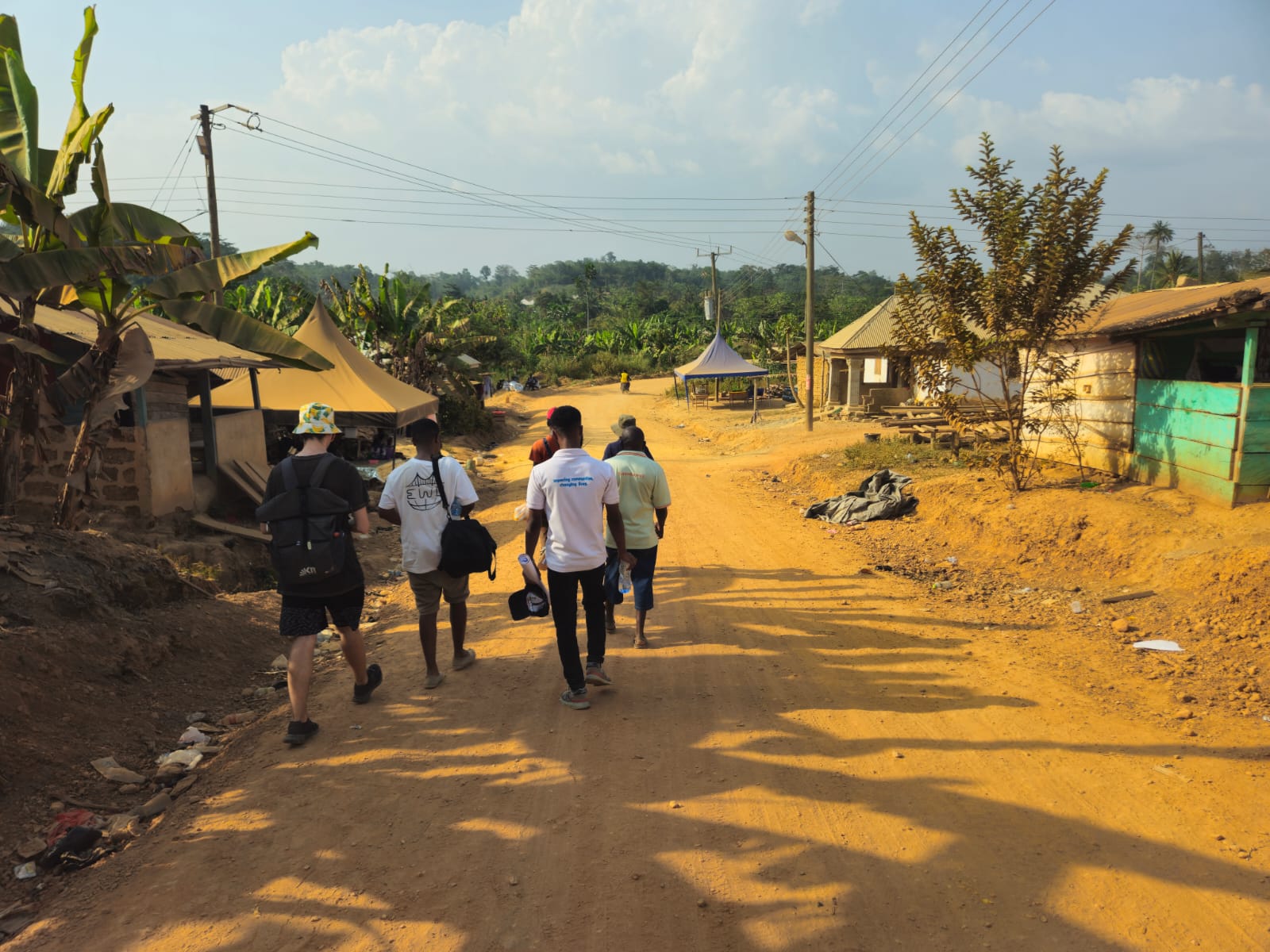
Image: Tanja Zuppe, EWB Karlsruhe
Tired of producing drawings that disappear into the archive after the final review? Looking for a project where your work has a real purpose beyond the submission deadline? This impromptu course offers the opportunity to contribute to a real development cooperation project in Ghana.
In collaboration with Engineers Without Borders Karlsruhe, students will work on the design of sustainable housing for teachers in the village of Aniamote. Since the local school faces an urgent shortage of adequate housing for its teaching staff, this project aims to design durable, affordable, and climate-appropriate residential apartments that improve living conditions and support long-term educational development in the community.
This practice-oriented course places architecture students within an interdisciplinary humanitarian project. The focus lies on producing a buildable and technically detailed design, rather than a purely conceptual proposal. Students will work through the project from architectural concept to construction drawings, engaging with structural logic, material choices, climatic considerations, and local building conditions.
The studio provides an opportunity to apply the construction knowledge acquired during previous semesters to a real-world context. At the same time, students will gain insight into the processes and challenges of humanitarian engineering missions and international development cooperation.
This impromptu course is intended for those who want to move beyond purely academic exercises and engage with addressing real needs. Students will expand their network and gain experience working alongside the team of Engineers Without Borders Karlsruhe.
Objective
- Support a humanitarian mission in Ghana
- Apply theoretical knowledge in practice: produce construction-ready drawings
- Work alongside Engineers Without Borders and gain insights into development cooperation projects
Lecturers

Dates
| Day | Time | Location |
|---|---|---|
| 17.06.2026 | 12:00-13:30 | LearnLab |